
Misogyny and sexism in schools: a whole-school approach
Challenging Misogyny Together
Sexist language, harmful online influencers and negative attitudes to women and girls are showing up in classrooms and playgrounds, in primary schools as well as secondary. Life Lessons helps you prevent it, respond to it and repair the harm, across the whole school.
The updated RSHE guidance puts greater emphasis on misogyny. Schools must follow it from September 2026.
Updated November 2026
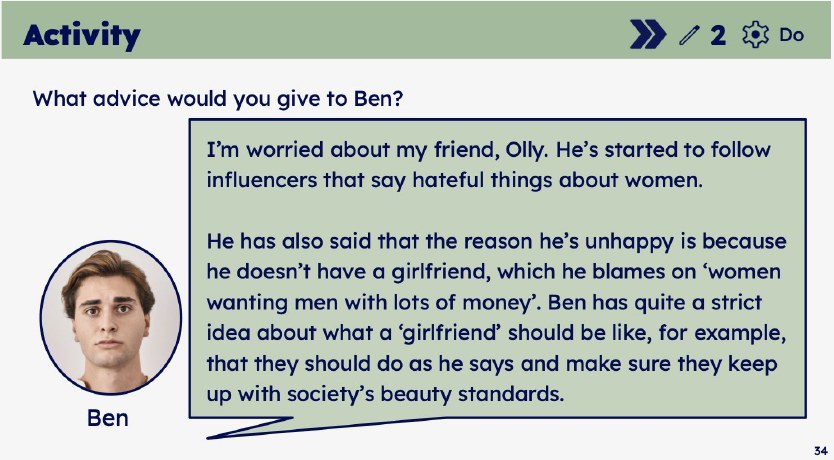
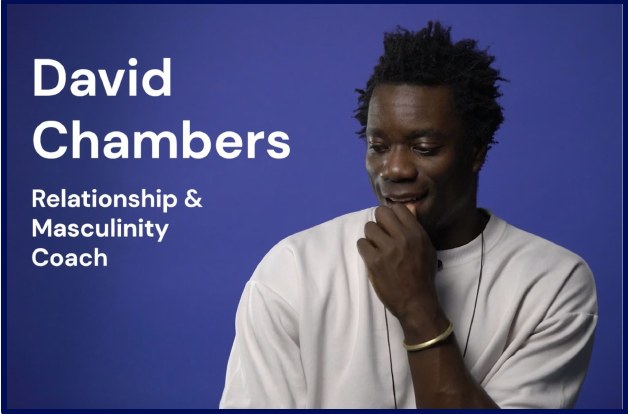
The problem
Misogyny and sexism are in our classrooms, and they start young
Ofsted’s review of sexual abuse in schools found it so widespread that it advised schools to act as though sexual harassment is happening, even when it isn’t reported.
92%
of girls said sexist name-calling happens a lot or sometimes to them or their peers.
70%
of secondary teachers have seen a rise in sexist language in the classroom over the last 12 months.
69%
of boys aged 11 to 14 have been exposed to online content that promotes misogyny.
23%
of primary teachers described boys making demeaning remarks about women and girls.
60%
of primary teachers are strongly concerned about the influence of online misogyny on pupils. For secondary teachers, it’s 76%.
88%
of girls said being sent pictures or videos they did not want to see happens a lot or sometimes.
Why it has become a problem
Online content is shaping how young people see women and girls
The algorithm pushes it
Misogynistic videos rose from 13% to 56% of the videos TikTok recommended to a test account within 5 days. That’s a fourfold increase. (UCL and University of Kent, 2024)
It reaches boys fast
On average, boys see harmful content within 30 minutes of going online, and 1 in 10 see it within 60 seconds. (Vodafone, 2024)
Influencers become role models
26% of secondary teachers described boys discussing Andrew Tate or online groups such as incels. Just under 20% of primary teachers described boys discussing online influencers. (University of York, 2025)
It moves off screens and into schools
Researchers found misogynistic ideas are becoming normalised in how young people treat each other in person. (UCL and University of Kent, 2024)

What schools are expected to do
- The updated RSHE guidance, published on 15 July 2025, puts greater emphasis on misogyny and violence against women and girls. Schools must follow it from September 2026. (PSHE Association)
- Keeping children safe in education 2026 treats misogyny as a safeguarding issue.
- Where misogynistic ideas come up in school, staff should challenge the ideas, not the person expressing them.
Our approach
A whole-school approach: prevent, respond, reflect and restore
Misogyny can’t be tackled by one lesson or one policy. Life Lessons gives schools a whole-school approach: prevent it, respond to it, and reflect and restore when it happens. It’s supported by staff CPD and weekly form time lessons.
Through the curriculum
Prevent
PSHE and RSHE lessons from primary to post-16 that build respect and help pupils recognise and challenge misogyny.
In the moment
Respond
Scripts and training so every member of staff responds to sexist comments and ‘banter’ calmly and consistently.
After an incident
Reflect & Restore
Reflective conversations and education interventions, so pupils understand the harm and don’t repeat it.
Prevent
Misogyny lessons through the PSHE curriculum, from primary to post-16
Every lesson ends with where to get support, inside and outside school.
KS1 and KS2
Primary
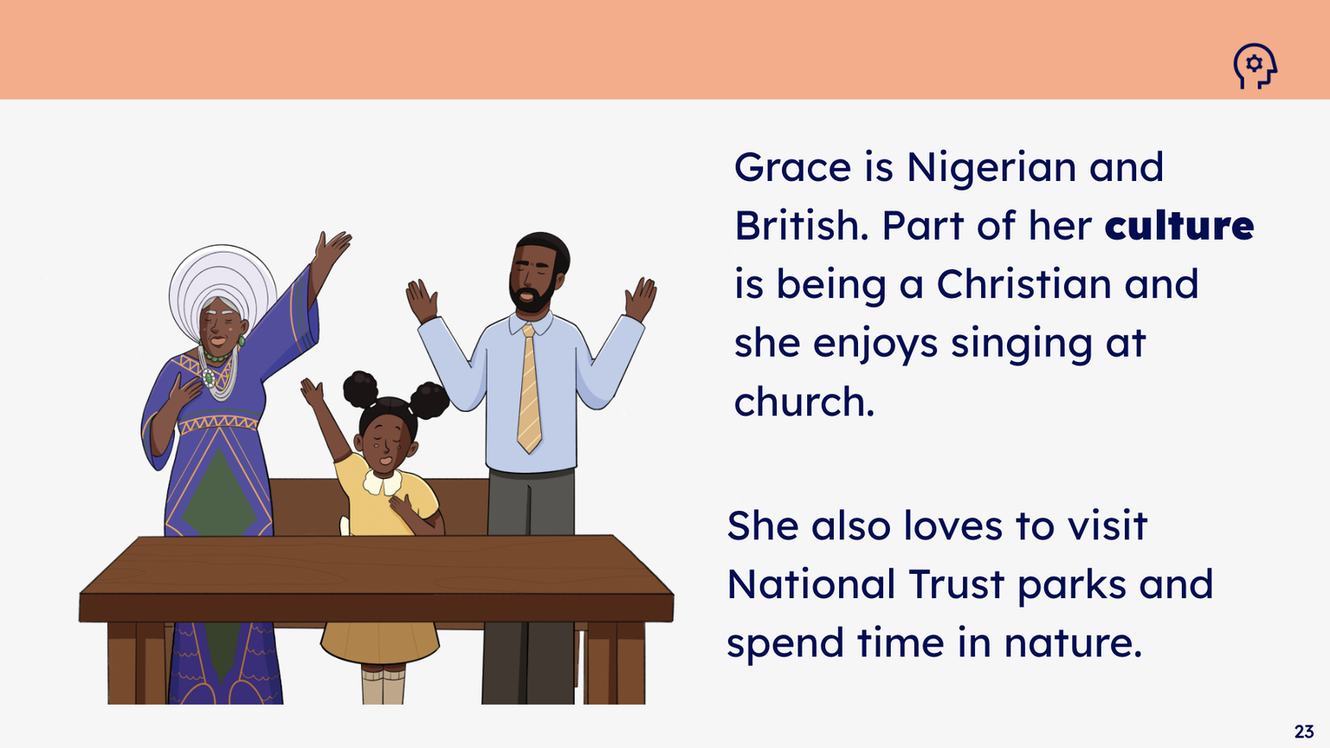
Builds the foundations early. Story-led lessons help children understand respect, kindness, healthy friendships and valuing difference, with characters who represent communities across Britain.
KS3 and KS4
Secondary
Pupils learn to recognise misogyny and how to challenge it, with lessons that cover:
- Identity, values and how stereotypes cause harm
- Recognising misogyny and how to challenge it
- Harmful online subcultures and influencers
- Positive masculinity and femininity, with real role models
- How pornography can distort views and fuel misogyny
- The signs of controlling relationships
KS5
Post-16
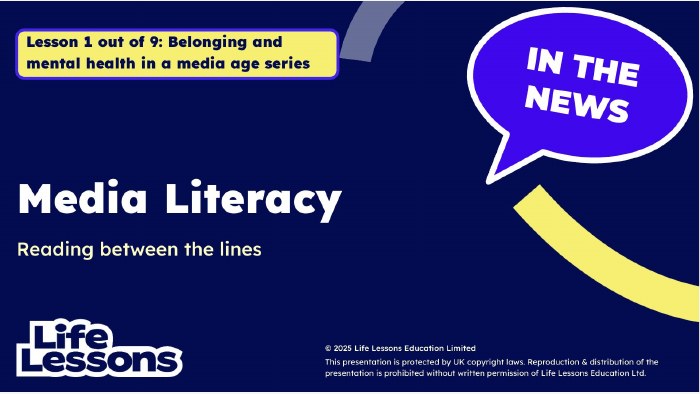
The PSHE curriculum continues into Years 12 and 13, and weekly In the News form time lessons respond to what young people are seeing online right now.
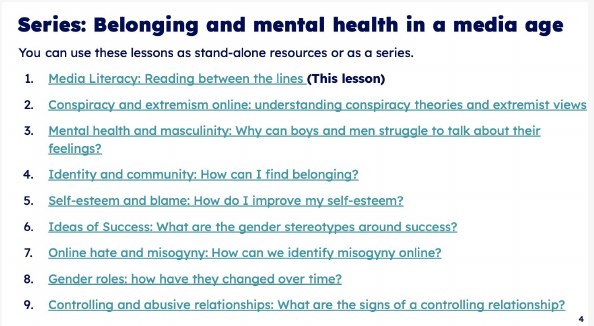
Lesson series
Belonging and mental health in a media age
9 lessons that can be taught as a series or on their own, including online hate and misogyny, gender roles, mental health and masculinity, media literacy, and the signs of a controlling relationship.
Respond
How to respond to sexist comments and ‘banter’ in class
When a sexist comment happens in class, staff need to respond straight away, calmly and consistently. Our in-the-moment scripts help every member of staff do that.
- Model an appropriate response in the classroom
- Help staff turn the behaviour around
- Training videos for staff
- Cover a range of behaviours, from misogyny to homophobia
The principle
Challenge the idea, not the person.
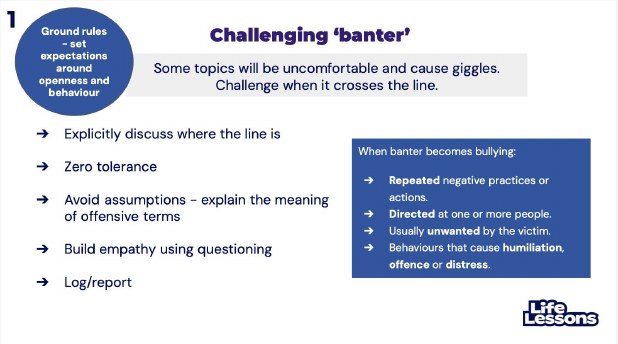
From our staff CPD: challenging ‘banter’
- Explicitly discuss where the line is
- Avoid assumptions, and explain the meaning of offensive terms
- Build empathy using questioning
- Log and report incidents
Reflect & Restore
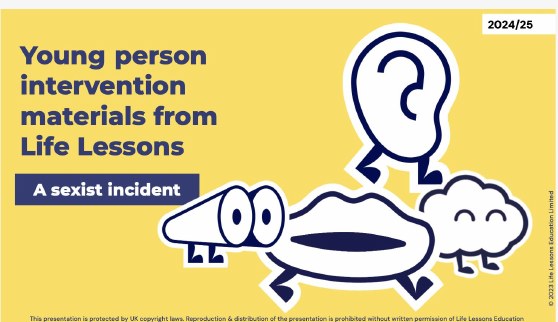
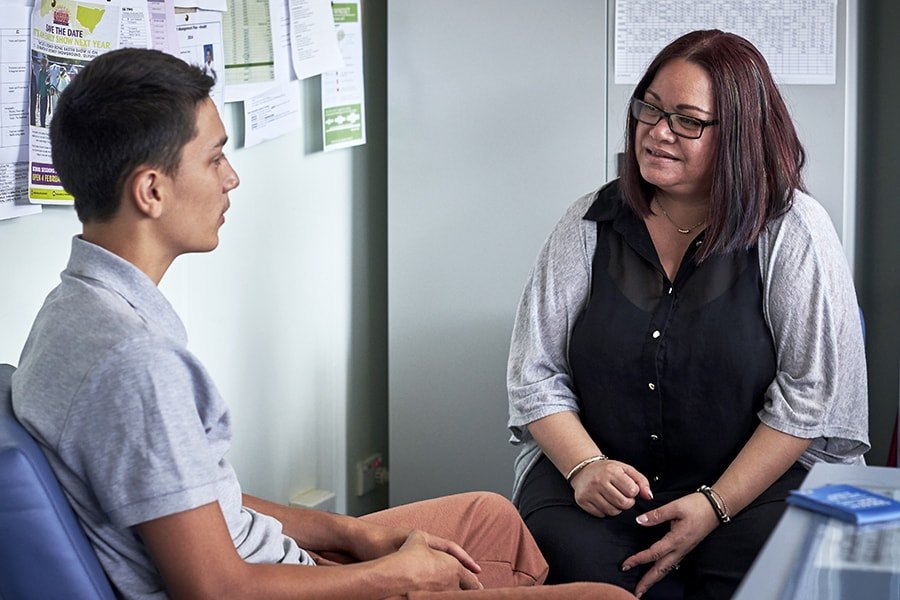
After a sexist incident: help pupils understand the harm
Reflective conversation
Once the pupil has received sanctions and is calm, ideally within 2 days. They reflect, feel listened to and connect with how others felt.
Education intervention
Young person intervention materials for a sexist incident help pupils understand why the behaviour is unacceptable, ideally within 2 days of the conversation.
Part of the Life Lessons behaviour management system, for secondary schools and post-16.
What schools say
Schools are seeing the difference
Case study · Behaviour intervention
“We have had an issue with the way some of our male students were talking to our female students… We chose one of our PE teachers, a young male positive role model, to deliver the Life Lessons behaviour intervention on sexualised language… Since this intervention last term, the students involved have not had any reports of the sexualised bullying made against them in school.”
Claire Oosthuizen, Assistant Head who oversees personal development, Estuary Academy
“We are having a big drive on misogyny and misandry at the minute, so the ‘In the News’ resources that have come up have been really useful.”
Martyn Tindall, Associate College Leader, Tudor Grange Academy Kingshurst
“The behaviour interventions have been a real success for our pastoral and safeguarding team… It actively promotes staff CPD and builds confidence in having those more challenging conversations on sensitive topics.”
Lucy Dan, DSL, Pyrland School

“As a PSHE lead, the proactive response from Life Lessons to the new guidance has been incredibly helpful. Their updated resources and clear support for schools have taken a huge amount of pressure off when reviewing and adapting our provision.”
Kirsty Lofty, PSHE Lead, The Parkside School
Trusted and recognised by
Explore the solutions
Find the right support for your school
Secondary PSHE
PSHE and RSHE for Years 7 to 11, including a behaviour and resilience curriculum.
Behaviour management
Prevent, Respond and Reflect & Restore, with scripts and interventions.
In the News
Weekly 15-minute form time lessons on what pupils are seeing online.
Resources for educators
Free resources to help you tackle misogyny and sexism
Upcoming webinar · Tuesday 24 November, 3:45pm to 4:45pm
Challenging misogyny, misandry and violence against women and girls
For the 16 Days of Activism against gender-based violence, 25 November to 10 December.


Misogyny and sexism in schools: your questions answered
What is misogyny?
Misogyny is dislike of, contempt for or prejudice against women and girls. In schools it can show up as sexist name-calling, ‘jokes’ and ‘banter’, unwanted images, or boys repeating ideas from online influencers.
What’s the difference between misogyny and sexism?
Sexism is prejudice or discrimination based on someone’s sex. Misogyny is directed at women and girls, and includes dislike of or contempt for them. Tackling everyday sexism in school, such as sexist ‘jokes’ and stereotypes, helps stop misogyny taking hold.
Is misogyny a problem in primary schools?
Yes. In a 2025 University of York study, 23% of primary teachers described boys making demeaning remarks about women and girls, and 60% were strongly concerned about the influence of online misogyny.
What does the updated RSHE guidance say about misogyny?
The updated statutory RSHE guidance, published in July 2025, puts greater emphasis on misogyny and violence against women and girls. Schools must follow it from September 2026.
How should staff respond to sexist comments in class?
Respond straight away, calmly and consistently, and challenge the idea rather than the person. Life Lessons in-the-moment scripts and staff CPD help every member of staff do this.
Do you have lessons on Andrew Tate and online influencers?
Yes. Our weekly In the News form time lessons include a series of 8 lessons on online influencers and misogyny. The Belonging and mental health in a media age series includes lessons on online hate and misogyny, and on mental health and masculinity.
What should a school’s anti-misogyny strategy include?
Prevention through the PSHE and RSHE curriculum, a consistent way for all staff to respond to sexist comments in the moment, and a process to reflect and restore after incidents, all supported by staff training.
How does Life Lessons help schools tackle misogyny?
Through a whole-school approach: prevention through the PSHE and RSHE curriculum from primary to post-16, in-the-moment scripts for staff, reflective conversations and education interventions after incidents, and weekly In the News form time lessons.
Build your whole-school approach to misogyny and sexism
Tell us what you’re working on and we’ll send you the information you need. No obligation.