
In July 2025, the Department for Education released updated statutory guidance for Relationships, Sex and Health Education (RSHE). At Life Lessons, we have welcomed these changes, and in our latest CPD session, our Curriculum Lead Thom Winterbotham and Inclusive Learning Developer Jayme Sims explored what they mean in practice for schools.
A stronger framework for anti-discrimination teaching
The updated guidance is explicit about what schools must deliver. Guidance points 65 and 66 make clear that RSHE topics should be taught in a non-discriminatory way, and that pupils should understand the importance of equality, respect, and the law around protected characteristics. For us, this means anchoring lessons in identity and values from the outset, helping young people understand who they are and how that connects to how they treat others.
Effective teaching in this area goes beyond simply defining protected characteristics. It involves using diverse, real-world portrayals that reflect the full range of pupils’ lives, and helping students recognise that the same characteristic can be either a source of vulnerability or resilience depending on context. Lessons should also address the emotional, societal, and legal impact of discrimination – including the Pyramid of Hate model, which illustrates how unchallenged bias and prejudice can escalate to more serious harm.
Tackling misogyny: The role of stereotypes and the internet
Guidance point 9 requires pupils to understand how stereotypes cause harm and to be able to recognise misogyny and other forms of prejudice. This is not just theoretical. In the classroom, it means creating activities that prompt students to identify stereotypes, discuss their consequences, and practise challenging misogynistic attitudes, in themselves and in others.
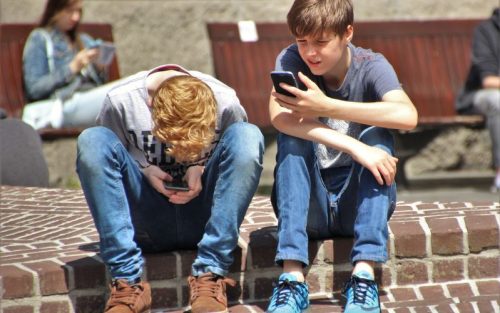
The digital world plays a central role in how young people encounter and internalise these attitudes. Guidance point 8 acknowledges that the internet can distort young people’s picture of the world and normalise unhealthy behaviours. Our approach is to create open, judgement-free conversations where pupils can critically examine content they’ve seen online – from harmful subcultures to the impact of pornography on attitudes towards women. Every lesson ends with signposting to relevant support, which schools can localise for their context.
A whole-school responsibility
The guidance also calls on schools to think beyond the PSHE classroom. Guidance point 51 encourages teachers across subjects to embed anti-misogyny teaching, whether through examining controlling relationships in literature, or tracing how democratic values around gender equality have evolved through history. Cross-curricular connections deepen understanding and signal to pupils that these values matter school-wide.
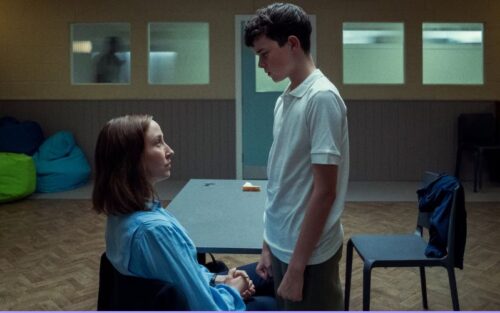
Guidance point 80 is equally important: staff should actively build a culture where prejudice is identified and tackled consistently. This means both universal classroom teaching and targeted behaviour interventions, and it means training staff to challenge a misogynistic idea or comment without shaming the pupil expressing it.
Anti-misogyny as a safeguarding responsibility
Perhaps the most significant shift in the new guidance is how it frames this work. Anti-misogyny is no longer simply a matter of enrichment or ethos – it is positioned as a safeguarding responsibility. Every school should have a robust anti-misogyny strategy in place.
At Life Lessons, we support schools to meet this responsibility through curriculum resources, form time materials, and targeted behaviour interventions – all designed to help young people make healthy choices and thrive.
To find out more about how Life Lessons can support your school, visit www.lifelessons.co.ukor contact us at hello@lifelessons.co.uk.