

Here at Life Lessons, we are on a mission to raise the profile of Personal, Social, Health, and Economic education, supported by significant evidence that high-quality PSHE education positively impacts students’ health, wellbeing, academic attainment, and future employability, making it as or more important than core subjects like English, Maths, and Science. The recent focus on RSE, PD, and Inclusion in Government guidance and the Ofsted framework reflects the shift towards prioritising wellbeing.
So why is PSHE Assessment important?
Assessment is crucial for raising both the profile and the quality of PSHE. It transforms the subject from an optional add-on into a measurable, valued core provision. Robust assessment data provides clear, tangible evidence of student development and offers leaders the opportunity to confidently demonstrate the subject’s impact on whole-child outcomes.
Shifting from anecdotal to data informed assessment will support schools to secure necessary resources and dedicated curriculum time, ensuring PSHE is taught with the same rigour as other core subjects, leading to higher quality teaching and improved student wellbeing.
Recognising the need to balance quantitative (often substantive) assessment data with valuable qualitative (disciplinary) outcomes (you can read more about the great debate between knowledge and skills here), Life Lessons has developed a robust, adaptable, easy-to-implement three-tier assessment strategy:
- The Skills Metric Resource
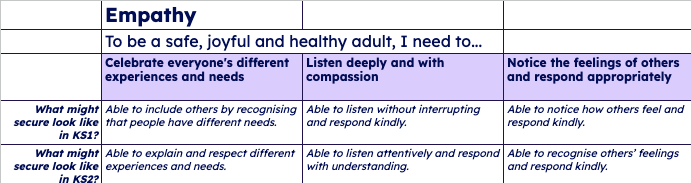
Image shows a snapshot of the skills metric resource for the empathy skill
This tool shifts the focus from “what children know” to “how children behave and think.”, recognising that the most significant PSHE outcomes—such as Emotional Literacy and Critical Thinking—are disciplinary, skills-based, and best captured through the nuanced, high-quality, formative observations and professional expertise of the full range of educational professionals.
It tracks progress across five core competencies: Emotional Literacy, Oracy, Critical Thinking, Mental Strength, and Empathy.
- Progressive Benchmarking: The resource breaks down complex behaviors into evidence-informed, progressive steps toward competency.
- Support for Teacher Judgment: Since PSHE relies heavily on teacher observation, we provide specific examples of what skill application may look like at different stages to ensure consistency
- Evidence of Growth: By measuring these “soft skills” tangibly, teachers can demonstrate real-world progress that traditional assessment often misses.
2. “I Can” Knowledge & Confidence Resource
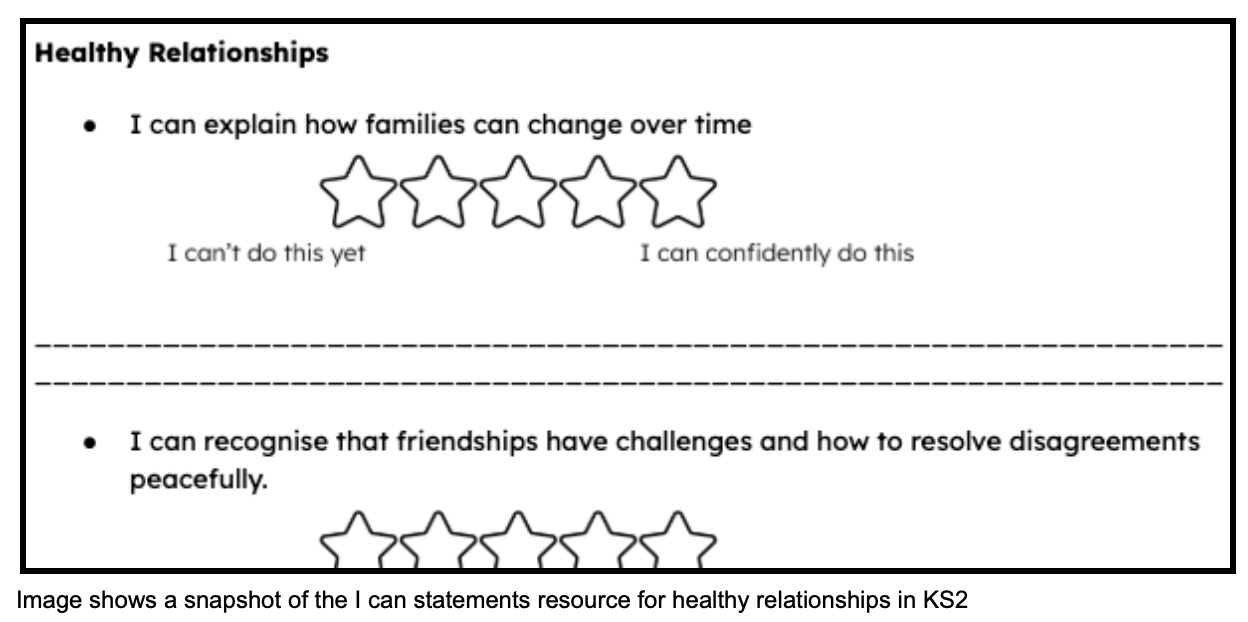
Built around the 2025 Statutory RSE guidance, this resource empowers pupils to identify and own their learning journey by self-identifying their strengths and gaps, while providing clear, quantifiable metrics of knowledge retention and pupil confidence to inform teacher planning.
- Self-Reflection: Children rate their own confidence in specific “I Can” statements, giving them agency over their personal development.
- Strategic Pre-Learning: By assessing topics before they are taught, teachers can generate excitement for upcoming units and identify common misconceptions early.
- KS2 Depth: For older students, the resource includes space for them to explain what these concepts mean to them, moving beyond simple definitions into deeper application.
3. Pupil Conferencing Resource
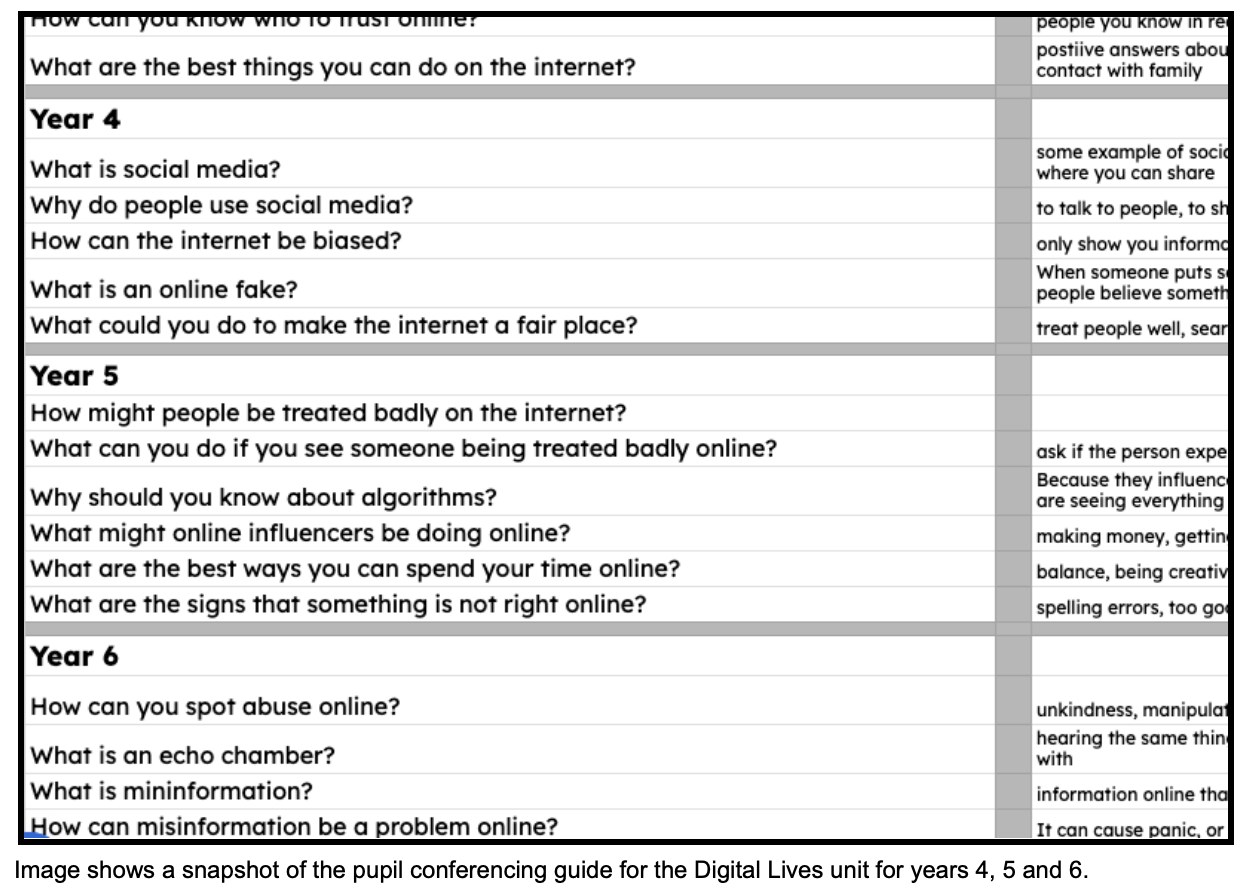
The ability to articulate learning, as well as respectfully share experiences and opinions, is clearly a core outcome for our discussion based approach. It is also a high profile strategy for leaders and inspectors to assess pupil learning and understanding. We therefore prioritised oracy based strategies for assessment.
This resource is designed to structure meaningful learning conversations for a range of staff and stakeholders. These conversations will inform future planning while simultaneously empowering young people to confidently and passionately articulate their learning.
- Oracy-Led Assessment: Questions are specifically designed to provoke deep discussion and explore student understanding of sensitive or “tricky” content.
- Inclusive & Adaptive: The prompts are open-ended to allow for diverse responses, ensuring the assessment is accessible to children of all abilities.
- Stakeholder Support: To support non-educational adults (such as Governors or Inspectors), we include specific safeguarding considerations for each topic, ensuring every conversation is safe, productive, and insightful.
The Ultimate Goal: Evidence-Based Progress
Our robust, evidence informed approach ensures that assessment isn’t just a “tick-box” exercise. By using these resources, schools can:
- Gather purposeful and impactful data to support the monitoring, planning and demonstration of PSHE/ PD provision
- Identify specific topics that require further reinforcement
- Provide students with a tangible sense of their own growth
- Deliver a robust, evidence-backed narrative of PSHE success to stakeholders.
Keep an eye on our social media to see these resources in action, and hear about how schools are using these to improve their PSHE provision.
If you would like to bring the Life Lessons curriculum and assessment resources to your school, request a quote, or book a call with us today!